

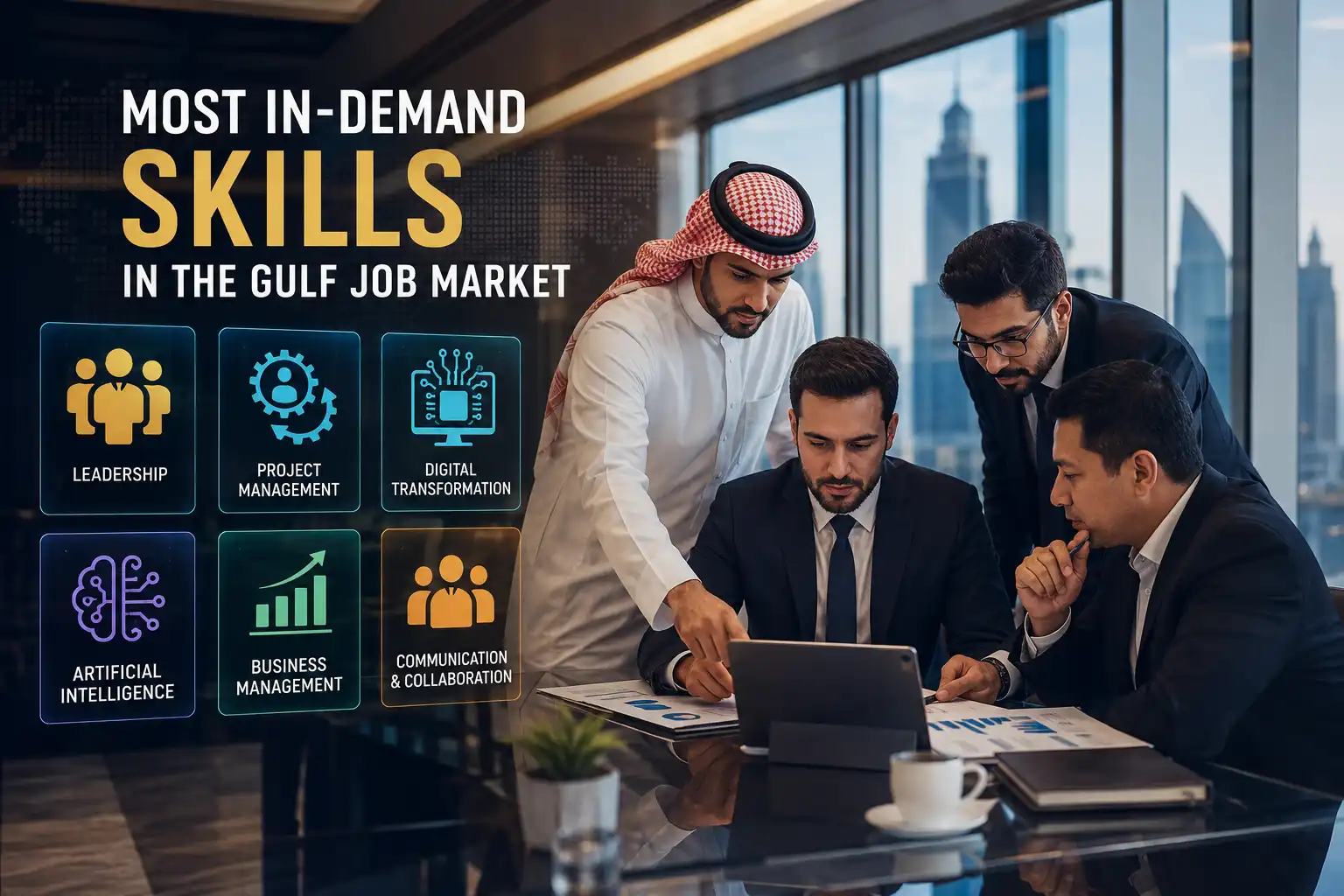
Most In-Demand Skills in the Gulf Job Market
Introduction
The Gulf job market is undergoing rapid transformation as countries such as Saudi Arabia and the United Arab Emirates invest heavily in economic diversification, digital transformation, innovation, and knowledge-based industries. Employers are no longer hiring solely based on academic qualifications or years of experience. Instead, they seek professionals with practical skills, leadership capabilities, and internationally recognized professional certifications. Understanding the skills currently shaping the Gulf employment market can significantly improve career opportunities, promotion prospects, and long-term professional success.
How Is the Gulf Job Market Changing?
Government initiatives such as Saudi Vision 2030, the UAE's digital transformation strategy, and similar national development plans across Kuwait, Qatar, Bahrain, and Oman are creating thousands of new career opportunities.
Organizations are investing in:
- Digital transformation.
- Artificial intelligence.
- Smart infrastructure.
- Financial services.
- Healthcare.
- Education.
- Advanced manufacturing.
- Entrepreneurship.
As businesses become more technology-driven, professionals are expected to continuously develop new competencies to remain competitive.
Why Skills Matter More Than Experience?
For many years, employers focused primarily on work experience.
Today, organizations increasingly evaluate candidates based on their ability to solve problems, adapt to change, collaborate effectively, and deliver measurable business results.
Professional skills now demonstrate an individual's readiness to contribute immediately to organizational success.
Continuous learning, professional certifications, and executive education have therefore become essential investments for ambitious professionals seeking long-term career growth.
The Most In-Demand Skills
Leadership
Leadership remains one of the most valuable competencies across Gulf organizations.
Modern employers seek professionals who can:
- Inspire teams.
- Lead organizational change.
- Solve complex business challenges.
- Drive innovation.
- Make strategic decisions.
Executive leadership programs continue to attract professionals preparing for senior management positions.
Project Management
Large-scale infrastructure projects, digital transformation initiatives, and business expansion across the Gulf have significantly increased demand for qualified project managers.
Professionals with expertise in:
- Project planning.
- Risk management.
- Budget control.
- Resource allocation.
- Agile methodologies.
are highly valued.
International certifications such as PMP further strengthen career opportunities throughout the region.
Digital Transformation
Digital transformation affects virtually every industry.
Organizations need professionals capable of implementing new technologies, optimizing business processes, and managing organizational change successfully.
Digital leadership has become a strategic business capability rather than a purely technical function.
Artificial Intelligence
Artificial intelligence is rapidly becoming a core business skill.
Managers across finance, marketing, operations, HR, and executive leadership increasingly rely on AI-powered analytics to improve decision-making, automate workflows, and identify growth opportunities.
Understanding AI applications has become a competitive advantage rather than a specialized technical skill.
Business Management
Strong business management capabilities remain fundamental to career advancement.
Professionals with knowledge of:
- Strategic planning.
- Financial management.
- Organizational leadership.
- Human resource management.
- Business operations.
continue to enjoy strong demand across Gulf markets.
Executive programs such as the MBA and professional studies help individuals strengthen these competencies while preparing for leadership responsibilities.
The Value of Professional Certifications
As competition for leadership and specialist positions continues to increase across the Gulf region, professional certifications have become an important indicator of competence and commitment to continuous learning.
Unlike traditional academic qualifications, professional certifications emphasize practical knowledge and workplace application. They demonstrate that professionals possess current industry skills aligned with international standards.
Professional certifications help individuals:
- Improve technical and managerial expertise.
- Increase employability.
- Strengthen professional credibility.
- Accelerate career advancement.
- Qualify for leadership positions.
- Stay competitive in rapidly changing industries.
Among the most respected certifications in the Gulf job market are:
- PMP for Project Management.
- MBA for Business Administration and Leadership.
- Human Resources certifications.
- Digital Transformation certifications.
- Artificial Intelligence and Data Analytics programs.
- Executive Leadership programs.
Professional studies have become particularly attractive because they allow working professionals to upgrade their skills while continuing their careers.
How to Develop Your Skills?
Building a successful career requires continuous professional development rather than one-time learning.
Professionals seeking opportunities in Saudi Arabia, the UAE, Kuwait, Qatar, Bahrain, and Oman should focus on developing skills that directly match employer expectations.
Practical steps include:
- Identifying the most relevant skills for your industry.
- Enrolling in accredited professional programs.
- Earning internationally recognized certifications.
- Improving communication and English-language skills.
- Learning digital technologies and AI applications.
- Attending professional conferences and workshops.
- Following global business and management trends.
- Expanding professional networks.
Combining theoretical knowledge with practical experience creates stronger career prospects and prepares professionals for future leadership responsibilities.
Why Professional Studies Matter?
Professional studies bridge the gap between academic education and workplace demands.
Unlike traditional education, professional programs emphasize practical application, real business challenges, and measurable outcomes.
Professionals choose these programs because they help them:
- Improve workplace performance.
- Develop leadership capabilities.
- Gain practical business knowledge.
- Increase promotion opportunities.
- Support long-term career development.
- Adapt to digital transformation.
Flexible learning options, including online executive education, also make professional studies accessible to working professionals across the Gulf region.
The Future of Employment in the Gulf
The Gulf labor market is expected to continue evolving as governments invest in innovation, technology, and sustainable economic growth.
Demand is projected to remain strong for professionals with expertise in:
- Artificial Intelligence.
- Cybersecurity.
- Project Management.
- Data Analytics.
- Digital Transformation.
- Executive Leadership.
- Business Administration.
- Financial Management.
Individuals who continuously upgrade their skills through professional education and internationally recognized certifications will be better positioned to secure leadership opportunities and long-term career success.
Frequently Asked Questions
What are the most in-demand skills in the Gulf job market?
Leadership, project management, digital transformation, artificial intelligence, business administration, communication, and analytical thinking remain among the most sought-after competencies.
Are professional certifications important in Gulf countries?
Yes. Employers increasingly prefer candidates with internationally recognized professional certifications because they demonstrate practical expertise and commitment to continuous learning.
Can professional studies improve career opportunities?
Absolutely. Professional studies help individuals develop practical skills, strengthen leadership capabilities, and improve promotion and employment prospects.
Which certification is most valuable for Gulf careers?
The answer depends on your profession, but highly respected certifications include PMP, MBA, executive leadership programs, digital transformation certifications, and HR certifications.
Conclusion
The Gulf job market is becoming increasingly competitive, dynamic, and technology-driven. Success is no longer determined solely by academic qualifications or years of experience. Instead, employers seek professionals who continuously develop practical skills, embrace innovation, and adapt to evolving business environments.
Investing in professional studies, business administration programs, project management certifications, leadership development, digital transformation, and artificial intelligence skills has become one of the most effective ways to achieve career advancement across Saudi Arabia, the United Arab Emirates, Kuwait, Qatar, Bahrain, and Oman.
As Gulf economies continue their transformation toward knowledge-based industries, professionals who prioritize lifelong learning and continuous professional development will be best positioned to secure rewarding careers, leadership opportunities, and long-term success.

Comments : 0